

Storage for children in stock

Barn i turkosa och ljusblå lager av kläder står i hallen och drar upp jackans dragkedja.

Guide to Fall and Winter

Three smart layers make it easy to adapt your child’s clothing to the temperature, weather, and activity. Here, we’ll help you choose the right layers, starting next to the skin.

Dressing children according to the layering principle makes it easy to adapt their clothing to the weather, temperature, and activity. By combining several thin, functional layers, you can help your child stay warm and dry without getting too hot when playtime gets going.

The 3-layer principle consists of a moisture-wicking layer next to the body, a warm mid-layer, and an outer layer that protects against wind, rain, or snow. On cold, active days, a merino wool base layer works well as layer 1. Fleece or wool fleece provides warmth as layer 2, while shell clothing, rainwear, or winter clothing forms the protective outer layer.

The number of layers needed depends on the weather and how much your child moves around. A child who runs and plays usually needs less insulation than a baby in a stroller or a child sitting still on a sledding hill. In this guide, we’ll help you choose the right layers and combine Geggamoja’s merino wool, fleece, and outerwear to suit your child’s needs.

This is how you can combine the layers

  • Two thin layers may be enough.

    Thin base layer

    Wind fleece or shell jacket

    Add a lighter fleece if needed

  • Build three flexible layers.

    Merino wool

    Lightweight fleece

    Shell jacket and shell pants

  • Prioritize protection from wet weather

    Base layers according to temperature

    Fleece in cold weather

    Rainwear

  • Warmth without getting sweaty

    Merino wool

    Fleece or wool fleece

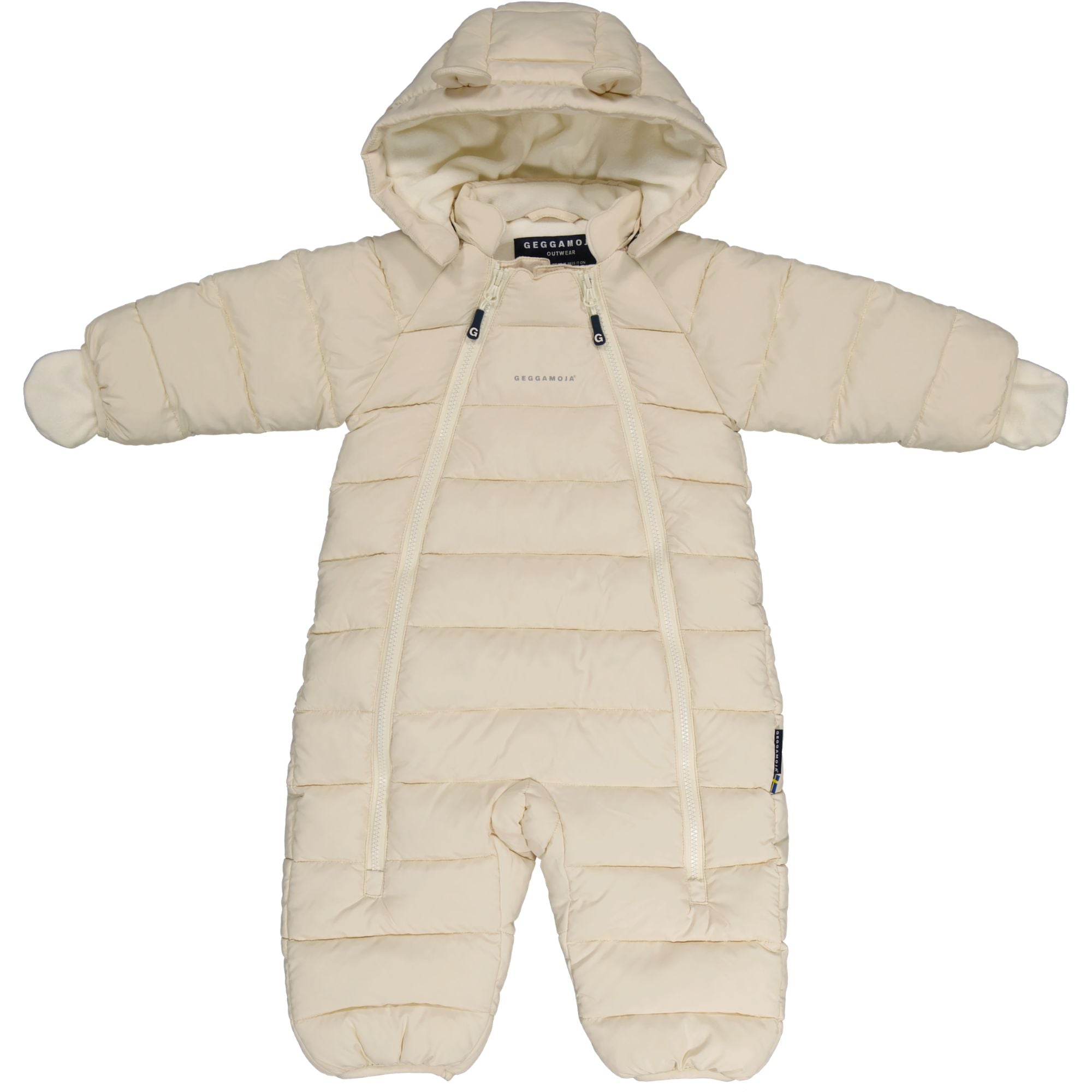
    Winter coverall

Yellow and white striped wind fleece jacket with a Pippi Longstocking motif on a child outdoors from Geggamoja.
The right amount of clothing

Active play or rest?

Children who run and play

Often need thinner or fewer layers. Too many clothes can make a child sweaty and later cool their body down.

Children in a stroller or sled

Need more insulation because their bodies don't produce as much heat. Add a footmuff or blanket depending on the weather.


Check the back of the neck
The child should feel warm but not sweaty. Cold hands don't always mean the whole child is cold.

Frequently asked questions about layering for children

  • Dressing in layers means putting your child in several functional layers. The innermost layer helps keep the skin dry, the middle layer retains warmth, and the outer layer protects against wind, rain, or snow. Adding or removing a layer makes it easy to adapt clothing to the weather and activity.

  • No, three layers are a guideline, not a rule. On mild days or during active play, two layers may be enough.

    When it’s cold or windy, or the child will be outside for a long time, three layers are often needed.

    Always adjust the clothing to the child’s activity level and how warm they tend to get.

  • Layer 1 should be worn closest to the body and help wick away moisture. A merino wool base layer is a good choice on cold days and during active play because wool regulates temperature and keeps you warm even when it gets damp. On milder, more relaxed days, a thinner base layer may be enough.

  • Merino wool is usually best worn closest to the body because it helps regulate temperature and wick away moisture. Fleece works better as a second layer, where its purpose is to insulate and retain body heat.

  • Yes, a wind fleece can be worn under a shell garment when it’s cold. Since wind fleece also protects against the wind, it works well as an outer jacket on dry spring and fall days. For very active play, a thinner fleece may be a more practical midlayer.

  • Shell clothing is well suited to changeable weather and active play because it protects against wind and rain while allowing excess heat to escape.

    Rainwear is a better choice in persistent rain, on really wet ground, and for playing in large puddles.

  • Feel the back of your baby’s neck or upper back. Your baby should feel warm but not sweaty.

    If their skin is damp or very warm, you can remove a layer. Cold hands or cheeks don’t always mean that your baby is cold all over.


  • A baby lying or sitting still in a stroller often needs more warmth than a child running around and playing. Start with merino wool or another soft base layer, add fleece or wool fleece, and finish with a snowsuit, blanket, or footmuff depending on the weather. Check your baby's neck regularly to make sure they don't get too warm.

    Here you can read more about how to dress your baby in winter

  • At preschool, garments that are easy to take off and put on are practical.

    A base layer or thin layer, a lightweight fleece and shell clothing give staff the flexibility to adjust children’s clothing as the weather and their activity change throughout the day.