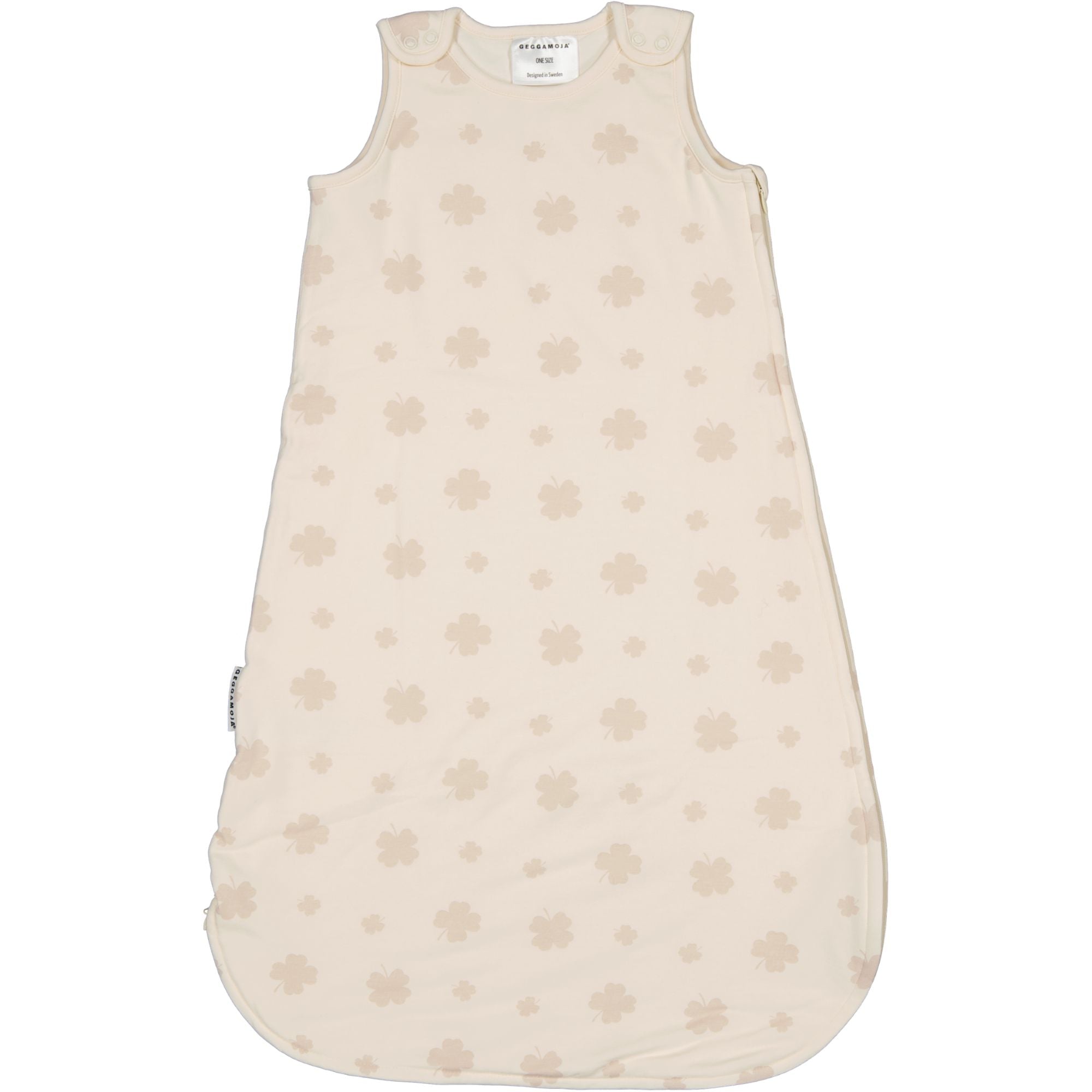
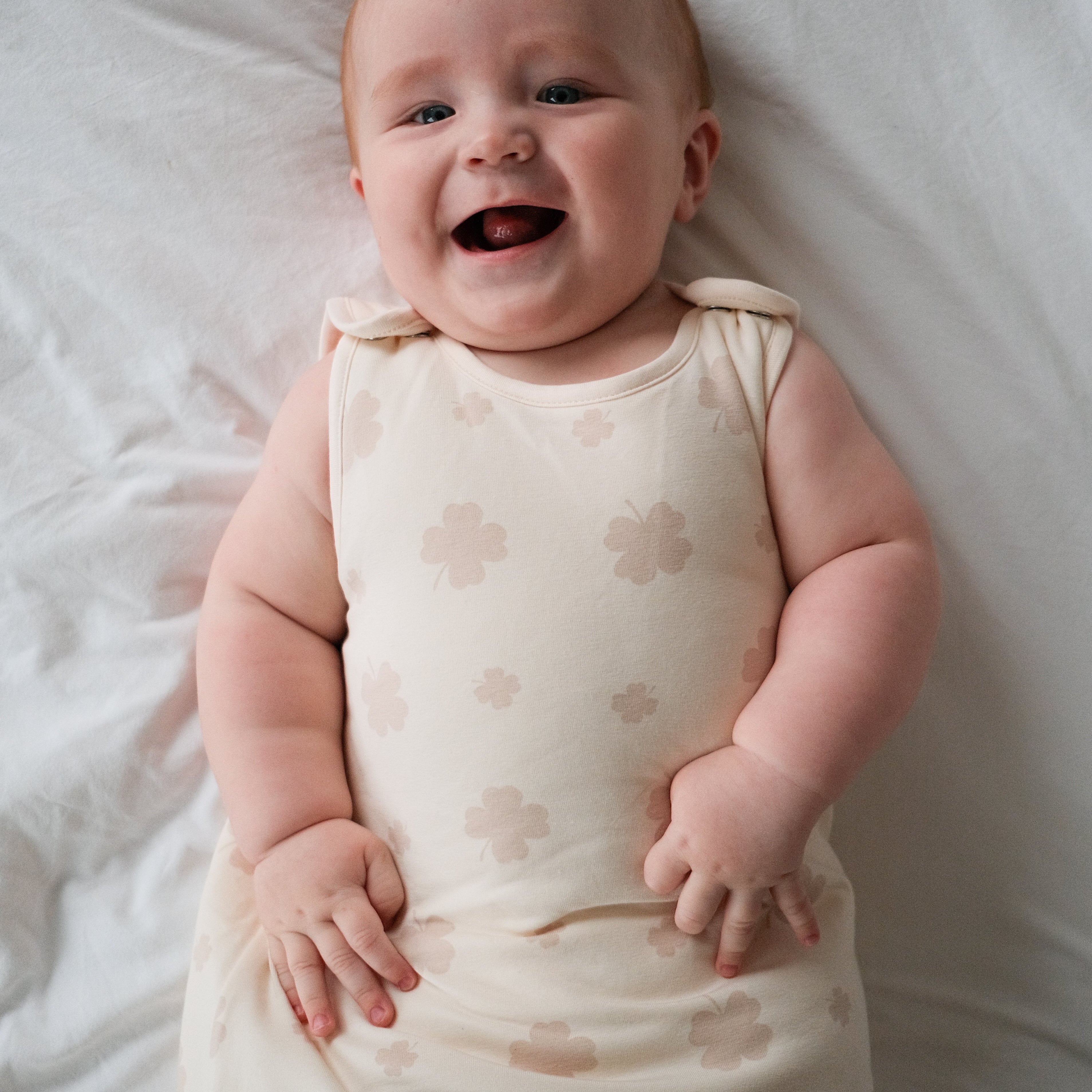
What is a baby sleeping bag?
A sleeping bag is a garment that a baby wears when sleeping or resting. It looks like pajamas with short or long sleeves and has a wide opening at the bottom. A sleeping bag can be used instead of a duvet or blanket when your baby sleeps. A baby sleeping bag is a safe alternative to a duvet or blanket for small children.
Benefits of using a sleeping bag
- A sleeping bag helps your baby maintain a good and even body temperature throughout the night, primarily because your baby cannot kick it off.
- You do not need to have a duvet or blanket lying in the bed. This means you do not have to worry about your child becoming tangled up and pulling the duvet over their face.
- You do not need to worry about your child getting cold.
- A sleeping bag makes diaper changes easier. We offer both sleeping bags with elastic at the bottom and ones with a zipper at the front and snap fasteners at the bottom, so you do not have to wake your child when it is time for a diaper change.
- It is easy to move freely without, for example, a duvet getting in the way.
- A sleeping bag contributes to a cozier and safer sleep because it wraps around your child.
4 reasons to choose Geggamoja's sleeping bags:
1. Durable materials: All our sleeping bags are made from the finest bamboo, organic cotton, and a small amount of elastane.
2. Versatile design: Choose from several different colors, patterns, and styles. Our range includes, among other things, cute sleeping bags with rabbits or hedgehogs, as well as solid-colored options.
3. Free from harmful substances: Our fabrics are made in an Öko-Tex-certified factory, which means you can be sure that every component of your product—that is, every thread, button, and other accessory—has been tested for harmful substances and that the product is safe for human health.
4. Safety-focused: When you buy a product from us, you can feel especially calm and secure. All our products are made with safety in mind and are tested and approved according to applicable laws and regulations.
What does the TOG rating mean?
In this guide, we also explain the TOG rating for sleeping bags and how to choose the right level for your baby.
TOG is a unit of measurement used to describe the insulation level or thermal efficiency of sleeping bags and duvets. This system is primarily used in countries such as the United Kingdom, Australia, and New Zealand. The TOG rating is measured in "TOG" and ranges from 2 to 15 or more, with higher TOG ratings indicating better insulation and therefore more warmth. Here is a general guide to understanding TOG ratings:
- Low TOG rating (for example, 1.0 TOG or lower): Suitable for warm and summer nights. These sleeping bags or duvets have less insulation and are suitable for warm climates or warm indoor environments.
- Medium TOG rating (approximately 1.0 to 2.5 TOG): Suitable for spring and autumn, when temperatures are mild to cool. These sleeping bags provide moderate insulation and warmth.
- High TOG rating (3 TOG or higher): Ideal for cold winter months and cold climates. These sleeping bags or duvets offer a high level of insulation and warmth.
TOG ratings for Geggamoja's sleeping bags
Geggamoja's sleeping bags are available in different TOG ratings, indicating how much warmth the product provides.
Our unpadded sleeping bags have a TOG rating of 0.3--0.4.
This means that they provide very light warmth and function more like pajamas than a duvet. They are intended for use at normal room temperature and warmer, and the child's other nightwear should always be adapted to the temperature in the room.
For autumn and winter, we offer padded sleeping bags with a TOG rating of 2.0.
These provide more warmth and are suitable for normal to cooler room temperatures. They can also be used in colder rooms (down to approximately 15--18 °C), depending on what the child is wearing underneath the sleeping bag. The child's clothing should always be adapted to the temperature and individual needs.
Tip:
The TOG rating is a guideline. The child's age, mobility, sleeping environment, and room temperature always affect which clothing is most suitable.
How long can a baby use a sleeping bag?
Geggamoja's sleeping bags can be used by your baby from birth until your child is 18 months old. During the baby's first year, we recommend that the child sleeps in a sleeping bag to reduce the risk of pulling the duvet over their face and head. A sleeping bag is perfect for use in a stroller or crib, or as an extra layer over a bodysuit and a pair of baby trousers for extra warmth and a comforting, enveloping feeling.